
The 2020 Kia Soul arrived as one of the most significant redesigns in the model’s history. After more than a decade of sales and a well-established reputation for quirky styling, smart packaging, and strong value, Kia faced the challenge of updating a fan favorite without stripping away its identity. The result is a vehicle that feels more mature and refined but still unmistakably a Soul. This review covers performance, design, interior quality, technology, practicality, reliability expectations, and ownership experience in depth.
Overview

When the Soul debuted in 2009, its boxy shape and fun-oriented marketing made it stand out in a sea of increasingly homogenized small cars. By 2020, the goal was to modernize the product without losing what made it iconic. The redesign brought sharper exterior lines, more advanced technology features, improved ride quality, and expanded driver-assistance availability. Yet Kia retained the tall-roof silhouette, spacious interior, and wide array of trims that allow buyers to tailor the Soul to their lifestyle and budget.
The 2020 Soul straddles a line between hatchback, compact crossover, and small wagon. It does not offer all-wheel drive, and Kia never marketed it as an off-roader. Instead, the Soul appeals to drivers who want city-friendly size, exceptional cargo and passenger space, distinctive looks, and strong value. Competing vehicles include the Nissan Kicks, Hyundai Kona, Honda HR-V, Toyota C-HR, and, for some buyers, compact hatchbacks like the VW Golf or Mazda 3. Against this field, the Soul uses clever packaging and personality to punch above its price bracket.
Exterior Design

The exterior redesign in 2020 sharpened nearly every line without abandoning the basic proportions. The front end became more streamlined, with narrower headlights stretched horizontally across the upper grille section. The lower grille grew bolder and more aggressive, especially on sport-themed trims. Kia retained the tall beltline and upright stance, which continue to give the Soul its signature presence.
The design emphasizes the vertical: tall taillamps that wrap around the rear window, a roofline that remains nearly flat until the tailgate, and squared-off edges that maximize interior space. It is a distinctive look that balances modern design language with nostalgia for earlier Souls. While some subcompact crossovers lean toward sloped rooflines and coupe-inspired shapes, the Soul remains loyal to functionality.
Trim differences play a major role in how the vehicle appears. The X-Line trim introduces rugged-themed body cladding, unique wheels, and a slightly more outdoorsy personality. The GT-Line trims add sportier fascias, red accents, and larger wheels, creating a more performance-oriented stance. Meanwhile, the base LX and mid-level S trims remain clean and simple, appealing to buyers who want value without flashy details.
Regardless of trim, the Soul continues to look like nothing else in its segment. The clean angles, tall roof, and expressive front fascia all convey purpose: maximizing interior room and creating a characterful aesthetic. For buyers who gravitate toward vehicles that stand out, this remains an enduring strength.
Interior: Space, Quality, and Comfort
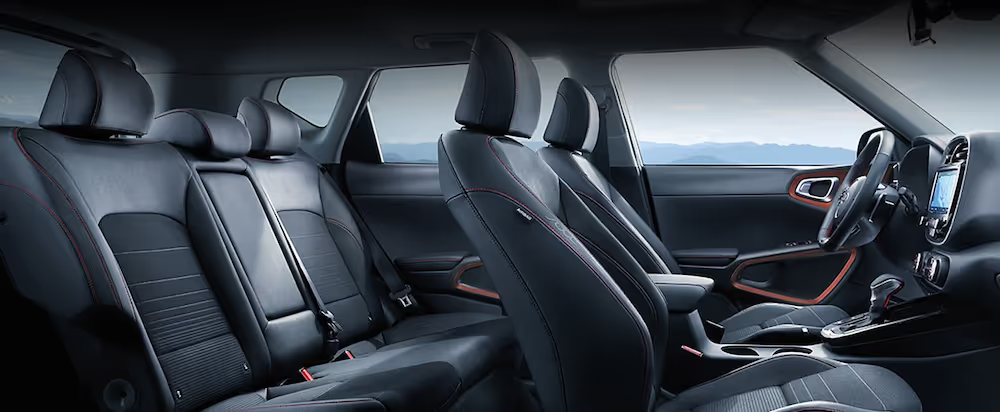
One of the Soul’s most persuasive traits has always been its interior volume relative to exterior footprint. The 2020 model improves on this formula with slightly more usable space, better sound insulation, and upgraded materials in most trims.
Cabin Layout and Ergonomics
The cabin retains a distinctly upright, airy atmosphere. The tall roofline gives the interior generous headroom in both rows, and the windows are large enough to provide excellent outward visibility. Unlike many subcompact crossovers where the cockpit can feel cramped or cocooned, the Soul feels open and welcoming.
The dashboard layout emphasizes simplicity. Controls for audio, climate, and vehicle functions are arranged logically, avoiding the trend of burying everything in touchscreen menus. Higher trims incorporate a larger 10.25-inch infotainment display that blends into an elongated housing across the dash, reinforcing a modern, high-tech aesthetic. Lower trims receive a more modest but still effective touchscreen with full smartphone integration.
The driving position offers a slightly elevated vantage point, though not as high as traditional crossovers. The seat height and open visibility will appeal to drivers transitioning from larger vehicles. Adjustability is adequate, though some taller drivers may wish for more telescoping range in the steering column.
Materials and Build Quality
Interior materials vary significantly by trim. The base LX is purposefully simple, using hard plastics that prioritize durability over softness. While nothing feels overly cheap, this trim clearly targets budget-conscious buyers.
Mid-level trims improve textures substantially. Soft-touch panels appear in more locations, door materials upgrade, and cloth upholstery gains more attractive patterns. At the top end, especially in the GT-Line Turbo and EX trims, the Soul presents an interior that feels surprisingly upmarket for the price, with synthetic leather accents, improved stitching details, ambient interior lighting, and well-damped controls.
Build quality is consistent across the lineup. Panel fit is generally tight, major surfaces feel solid, and Kia’s overall assembly quality has steadily improved over the years. While some rivals in the segment may offer plusher panels or more premium finishes, the Soul’s interior excels in durability, practicality, and user-friendly layout.
Seating and Comfort
Front-seat comfort is good for the class. The seats are supportive without being overly firm, and the wide range of cabin space allows for relaxed posture even on longer drives. The rear seats are a highlight: passengers enjoy exceptional headroom and legroom for this segment. Two adults can travel comfortably in the back, a claim many subcompact crossovers cannot make.
The rear seatbacks fold nearly flat, expanding cargo flexibility. Heating for the front seats and steering wheel is available on higher trims, adding comfort in colder climates. Ventilated seats are not offered, but this is typical for the class.
Cargo and Practicality
If interior space is one pillar of the Soul’s value, cargo room is the other. The 2020 redesign continues the tradition of offering one of the largest cargo areas in the subcompact class.
With the rear seats up, the cargo floor is deep, tall, and square—excellent for stacking suitcases or groceries. With the seats folded, the cargo capacity expands dramatically, effectively turning the vehicle into a small utility hauler. The tall roof enables carrying bulky items that simply would not fit in more sloped-roof competitors.
The wide-opening tailgate and low load floor enhance everyday usability. Small-item storage within the cabin is plentiful as well. There are multiple large cupholders, door pockets capable of holding sizable bottles, and a center console storage compartment that accommodates typical daily items like wallets, chargers, or small handbags.
For buyers who need a city-friendly vehicle but routinely carry sports gear, musical instruments, work supplies, or large dogs, the Soul offers exceptional practicality without stepping up to a larger SUV.
Infotainment and Technology
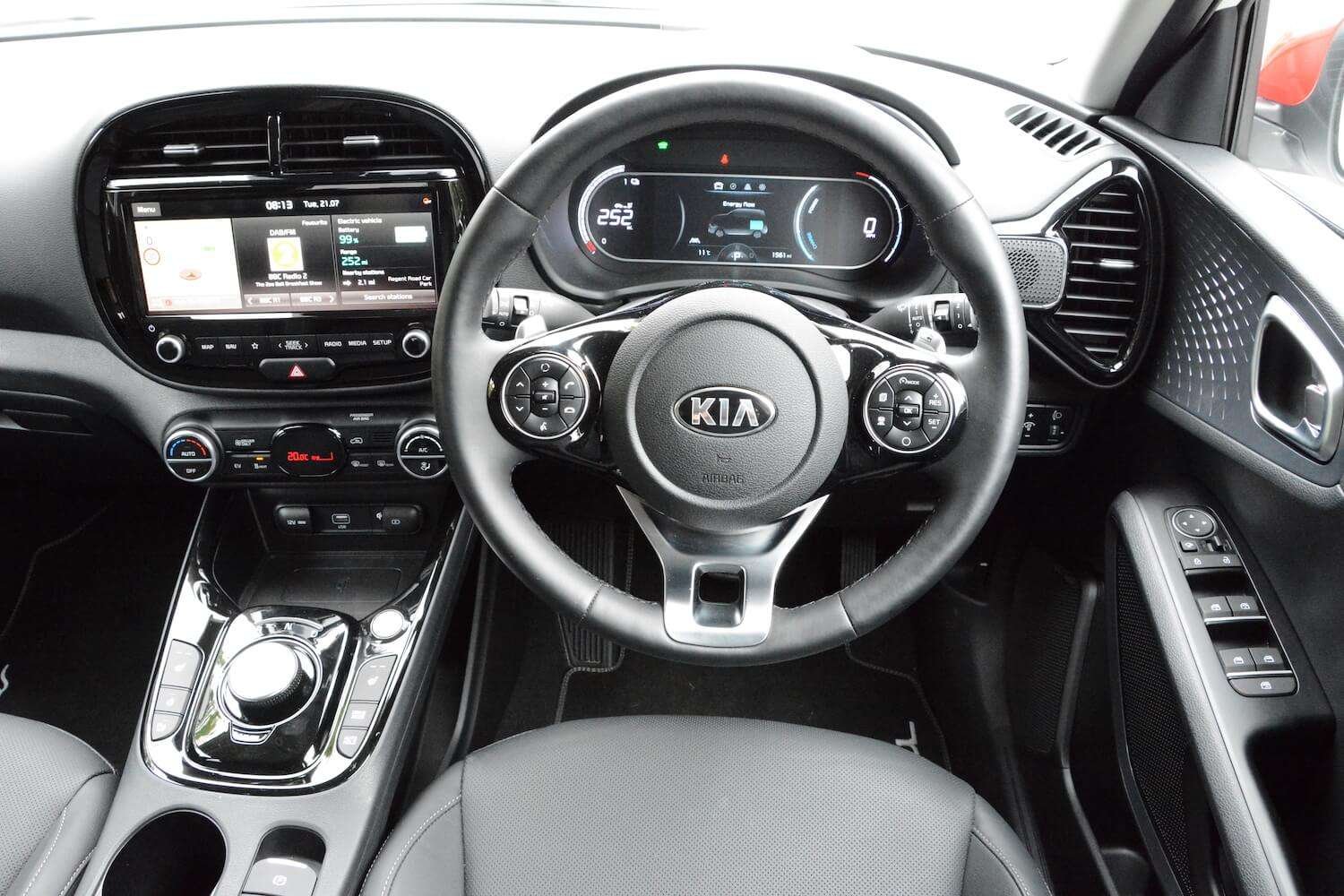
Kia has earned a strong reputation for intuitive technology, and the 2020 Soul builds upon this foundation.
Infotainment System
The standard infotainment system includes a touchscreen, Bluetooth, and full smartphone integration through Apple CarPlay and Android Auto. These features are standard across nearly all trims, a notable advantage over rivals that often restrict such features to higher-priced variants.
Upper trims receive a 10.25-inch widescreen display with split-screen capability, navigation, and more advanced functionality. The interface is responsive, the menus are clear, and the graphics are crisp. Physical shortcut buttons remain present, which helps reduce distraction.
Audio Systems
Depending on the trim, audio options range from a basic six-speaker system to a premium Harman Kardon audio package. The upgraded system includes a subwoofer and distinctive speaker lighting elements that can pulse with the music. While these ambient lighting effects may not appeal to every buyer, they reinforce the Soul’s youth-oriented, expressive personality.
Connectivity and Convenience Features
Higher trims offer wireless phone charging, multiple USB ports, upgraded driver information displays, and keyless entry with push-button start. Climate controls remain physical and easy to use, which many drivers will appreciate.
Overall, the Soul’s tech stands out as one of the strongest and most accessible in its class.
Safety and Driver-Assistance Features
The 2020 Soul brought an expanded suite of available driver-assistance technologies. These include:
Forward collision warning with automatic emergency braking
Lane-keep assist
Lane departure warning
Driver attention monitoring
Blind-spot monitoring with rear cross-traffic alert
Adaptive cruise control (available on higher trims)
Not all features come standard on the base trim, but mid-level trims offer strong safety value. The system performance is competent, and alerts are not overly intrusive. Automatic emergency braking and lane-keeping are particularly beneficial for highway commuting and urban traffic.
Crash safety ratings are strong for the segment, and the rigid structure of the redesigned platform contributes to confidence on the road.
Powertrains and Performance

Two primary engines are available in the 2020 lineup, each delivering a distinct personality.
2.0-Liter Naturally Aspirated Engine
This engine is the workhorse of the lineup, producing approximately 147 horsepower. Paired with a continuously variable transmission (marketed by Kia as an IVT), it focuses on smoothness and fuel efficiency.
In daily driving, the engine offers adequate acceleration for city use. The tuning of the CVT does a good job imitating the behavior of a traditional automatic, avoiding the high-rpm droning common to some CVTs. For buyers prioritizing economy, predictable performance, and low cost of ownership, this engine is perfectly suitable.
The 2.0-liter can also be paired with a 6-speed manual on the base LX trim. This configuration appeals to a small subset of buyers who prefer traditional shifting and a more connected driving feel. While not sporty, the manual adds engagement and keeps costs down.
1.6-Liter Turbocharged Engine
For drivers seeking more energy, the turbocharged 1.6-liter engine produces around 201 horsepower and is paired with a seven-speed dual-clutch automatic. The result is significantly livelier acceleration, particularly in mid-range passing situations.
The dual-clutch transmission shifts quickly and generally smoothly, though in heavy stop-and-go traffic, some drivers may experience slight hesitation—characteristic of many dual-clutch setups. Once at speed, it feels crisp and responsive.
This engine gives the Soul genuine punch and transforms its personality from mild and practical to playful and engaging. Steering feel remains light, but handling is tidy thanks to the vehicle’s compact dimensions.
Ride and Handling
The Soul rides on a simple suspension setup that balances firmness and comfort. The 2020 redesign improved damping, reducing the choppiness sometimes felt in earlier models. Even with larger wheels on GT-Line trims, the ride remains controlled.
Road noise is moderate but improved over the previous generation. The upright design does lead to some additional wind noise at highway speeds, though not enough to disrupt normal conversation.
The Soul’s handling strengths are agility and predictability. Its short wheelbase and tight turning radius make it excellent in tight urban environments, parking garages, and quick lane changes. While not a performance vehicle, the turbocharged version in particular can put a smile on a driver’s face with its spirited acceleration.
Fuel Economy
Fuel economy varies by engine and transmission:
The 2.0-liter engine with the CVT typically returns strong fuel economy in both city and highway use, placing it near the top of the class.
The manual transmission version consumes slightly more fuel, as expected.
The turbocharged 1.6-liter engine trades a bit of efficiency for its significant increase in power, though still remains competitive.
Overall, the Soul performs well in real-world driving, combining efficient powertrains with aerodynamic improvements from the redesign.
Reliability, Warranty, and Ownership Costs
Kia has developed a solid reputation for reliability, backed by one of the longest warranties in the industry. The 2020 Soul benefits from this in several ways.
Reliability Expectations
Both engines have proven durable in widespread use. The naturally aspirated 2.0-liter is particularly simple and robust. The turbocharged engine’s longevity depends more on proper maintenance, including timely oil changes.
Electrical and infotainment systems in 2020 models generally perform well, with relatively low complaint rates compared to peers.
Warranty Coverage
Kia’s generous warranty remains a major selling point:
10-year/100,000-mile powertrain warranty
5-year/60,000-mile basic warranty
This coverage significantly reduces long-term ownership costs and adds peace of mind, especially for budget-conscious buyers.
Maintenance and Cost of Ownership
Routine maintenance costs are modest. The Soul uses affordable tires, common brake components, and accessible service points. Insurance rates tend to be reasonable as well. Depreciation is moderate but improved compared to earlier Kia models thanks to better brand perception and vehicle quality.
Trims and Value Proposition
The 2020 Soul’s trim lineup allows buyers to tailor the vehicle to their budget and personality.
LX
The base LX provides strong value. It includes essential connectivity and safety, and the manual transmission variant appeals to purists. Materials are basic, but the price-to-space ratio is extremely compelling.
S
The S trim adds important safety features, upgraded interior materials, and more convenience features. This trim represents the best value for most buyers seeking affordability with modern amenities.
X-Line
Positioned as the rugged-themed option, the X-Line emphasizes style with unique body cladding and wheels. Mechanically, it is similar to other 2.0-liter models, but its visual presence appeals to buyers who want a more adventurous aesthetic.
GT-Line
The GT-Line trims add sportier styling, larger wheels, and interior upgrades. The top GT-Line Turbo includes the more powerful engine, larger infotainment display, and numerous premium features. This trim delivers the most engaging driving experience and a near-premium cabin feel while remaining priced competitively.
EX
The EX trim focuses on comfort, convenience, and technology rather than sportiness. It includes keyless entry, heated seats, advanced infotainment, and upgraded materials. For buyers prioritizing refinement over performance, the EX is a strong choice.
Weaknesses and Limitations
While the 2020 Soul offers many strengths, it does have notable limitations.
No All-Wheel Drive
The absence of all-wheel drive may deter buyers in snowy climates or those who plan light off-road use. Some competitors, such as the Hyundai Kona and Honda HR-V, offer AWD configurations.
Wind Noise at Speed
The distinctive upright shape, while great for interior room, means the Soul experiences more wind noise on highways compared to more aerodynamic rivals.
Dual-Clutch Transmission Behavior
On turbocharged models, the dual-clutch transmission can feel hesitant at very low speeds, especially during parking maneuvers or heavy stop-and-go traffic. Drivers unfamiliar with DCT behavior may notice this nuance.
Cabin Materials on Base Trims
While higher trims feel impressively upscale for the segment, the base trim uses hard plastics that may feel too basic for some buyers. That said, durability remains high.
Final Verdict
The 2020 Kia Soul is one of the most uniquely practical and character-driven vehicles in the subcompact crossover market. It combines exceptional interior space, strong value, modern technology, and a wide range of trims that allow buyers to prioritize style, comfort, or performance. The redesign modernizes the vehicle without diluting its personality.
For budget-conscious shoppers, the Soul provides an unbeatable combination of affordability and utility. For drivers seeking a fun and expressive vehicle, the sport-themed trims and turbocharged engine deliver surprising enjoyment. For families or commuters wanting an economical runabout with generous cargo and passenger room, the Soul excels.
It is not a perfect vehicle. All-wheel drive is absent, base cabin materials are basic, and the dual-clutch turbo model has quirks in traffic. But these drawbacks are outweighed by the Soul’s strengths: practicality, technology, warranty, and charm.
The 2020 Kia Soul succeeds because it knows exactly what it wants to be: a uniquely styled, cleverly packaged, value-rich small crossover that stands apart from the crowd. For many buyers, that combination is exactly right.